
Most practices don’t have a billing problem — they have a revenue operations problem. As payers and EHR vendors deploy AI, the challenge is no longer submitting claims. It’s knowing who owns the outcome when revenue issues arise.
OACIS handles both — and stays accountable for the financial outcome, not just the submission.
Most practices don’t have a billing problem — they have a revenue operations problem. As payers and EHR vendors deploy AI, the challenge is no longer submitting claims. It’s knowing who owns the outcome when revenue issues arise.
Insurance companies are using AI to scrutinize claims. EHR vendors are automating workflows. But when reimbursement issues arise, practices need a partner who understands the payer, understands the practice, and takes ownership of the outcome.
That's the Revenue Operations Gap — the growing distance between reimbursement complexity and a practice's ability to manage it effectively.
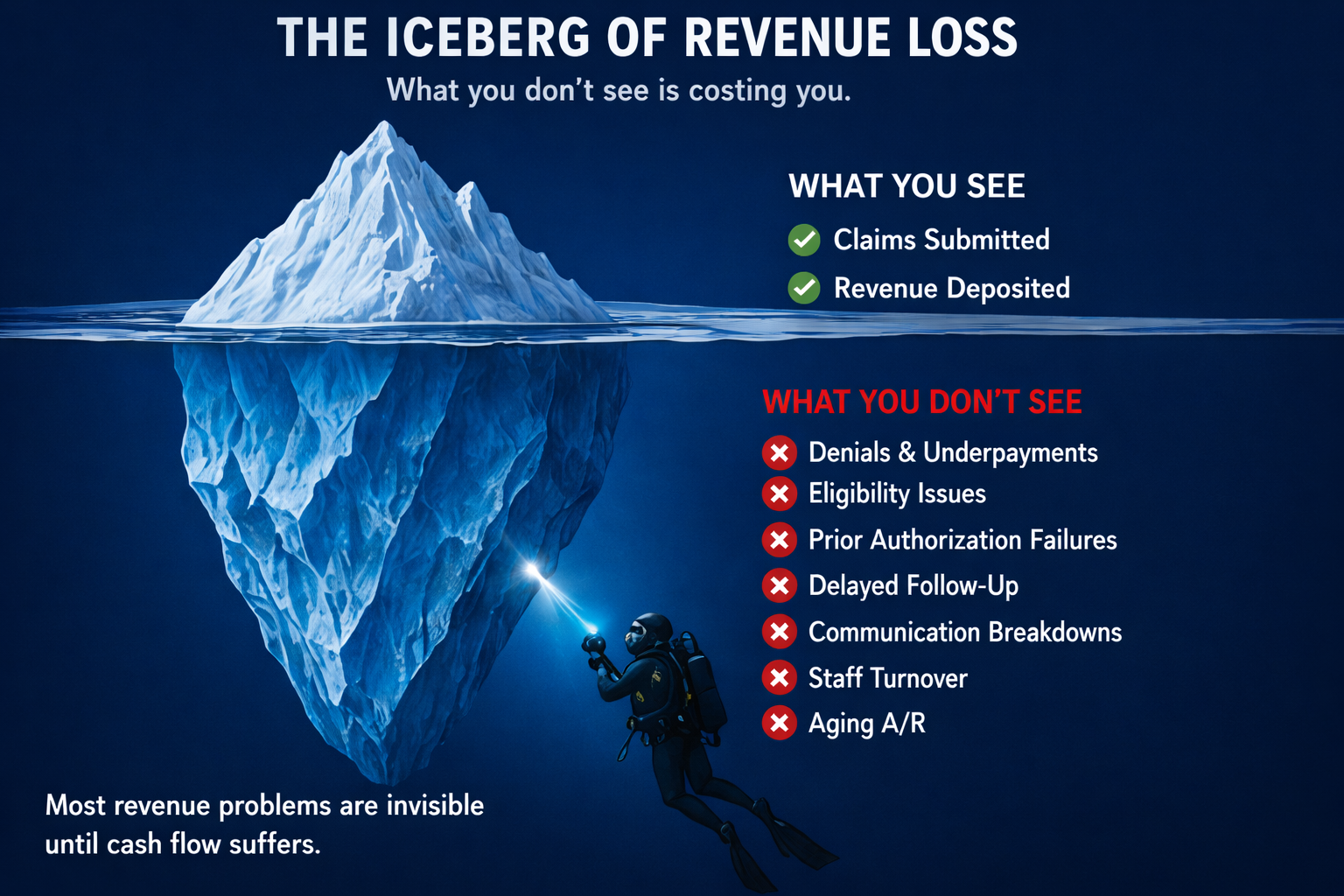
Most practices are not losing revenue because claims aren't being submitted. They're losing it because nobody is watching what comes back — identifying denial patterns, catching underpayments against contracted rates, and following up systematically before A/R ages beyond recovery.
OACIS was built specifically around this reality. Our team combines certified coding expertise with dedicated revenue operations management — so that every dollar your practice earns from patient visits is actively pursued, tracked, and collected.
While urgent care is our primary focus, our revenue performance framework also supports growth-focused healthcare practices seeking measurable financial optimization.
Most practices are not losing revenue because claims aren't being submitted. They're losing it because nobody is watching what comes back — identifying denial patterns, catching underpayments against contracted rates, and following up systematically before A/R ages beyond recovery.
OACIS was built specifically around this reality. Our team combines certified coding expertise with dedicated revenue operations management — so that every dollar your practice earns from patient visits is actively pursued, tracked, and collected.
While urgent care is our primary focus, our revenue performance framework also supports growth-focused healthcare practices seeking measurable financial optimization.
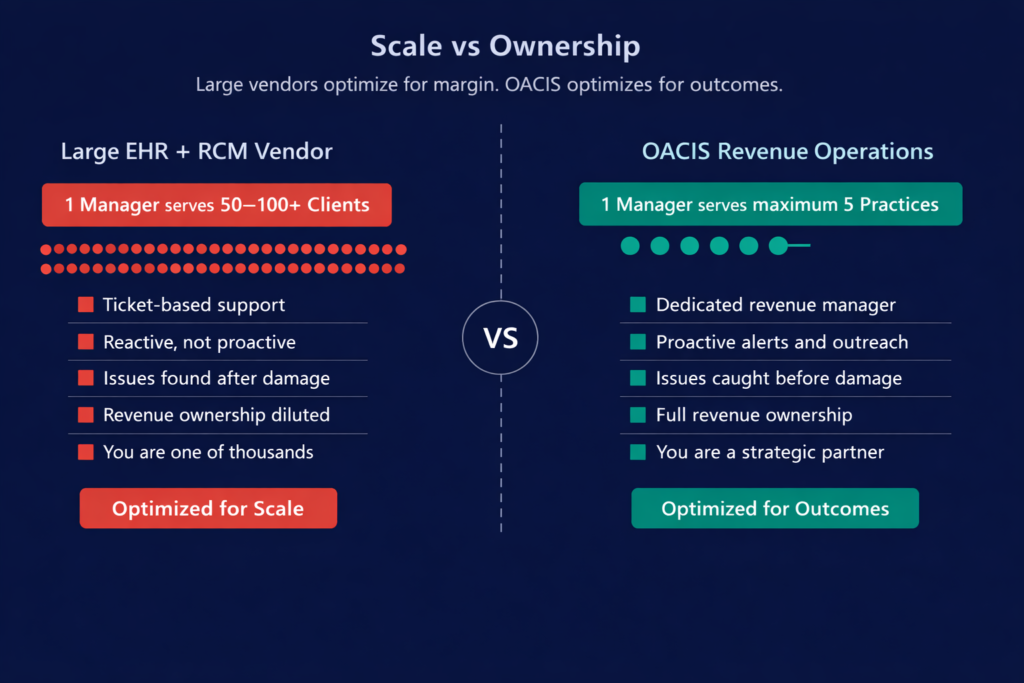
Your EHR and RCM vendor may be using AI to accelerate claims processing. But AI automation comes with a trade-off most vendors don't advertise: as headcount decreases, so does human responsiveness.
You become one of thousands of clients. Issues are addressed after they occur, not before. The person who understands your practice and your payers is replaced by a ticket queue. Revenue ownership — the thing that actually determines whether you get paid — quietly disappears.
OACIS manages your complete revenue cycle, from front-desk eligibility to final payment recovery. The difference is we don't stop when the claim is submitted.
Maximize your revenue and minimize your risk with our expert Medical billing, coding, and credentialing services.
Payer trends & insights
Every dollar pursued
Prevention + recovery
Certified, specialty-specific
Clean claims, fast cycles
Accurate & timely
Streamline administrative workflows and smoothen patient interactions with custom SOPs designed for your goals.
48h before every visit
Submit, track & obtain
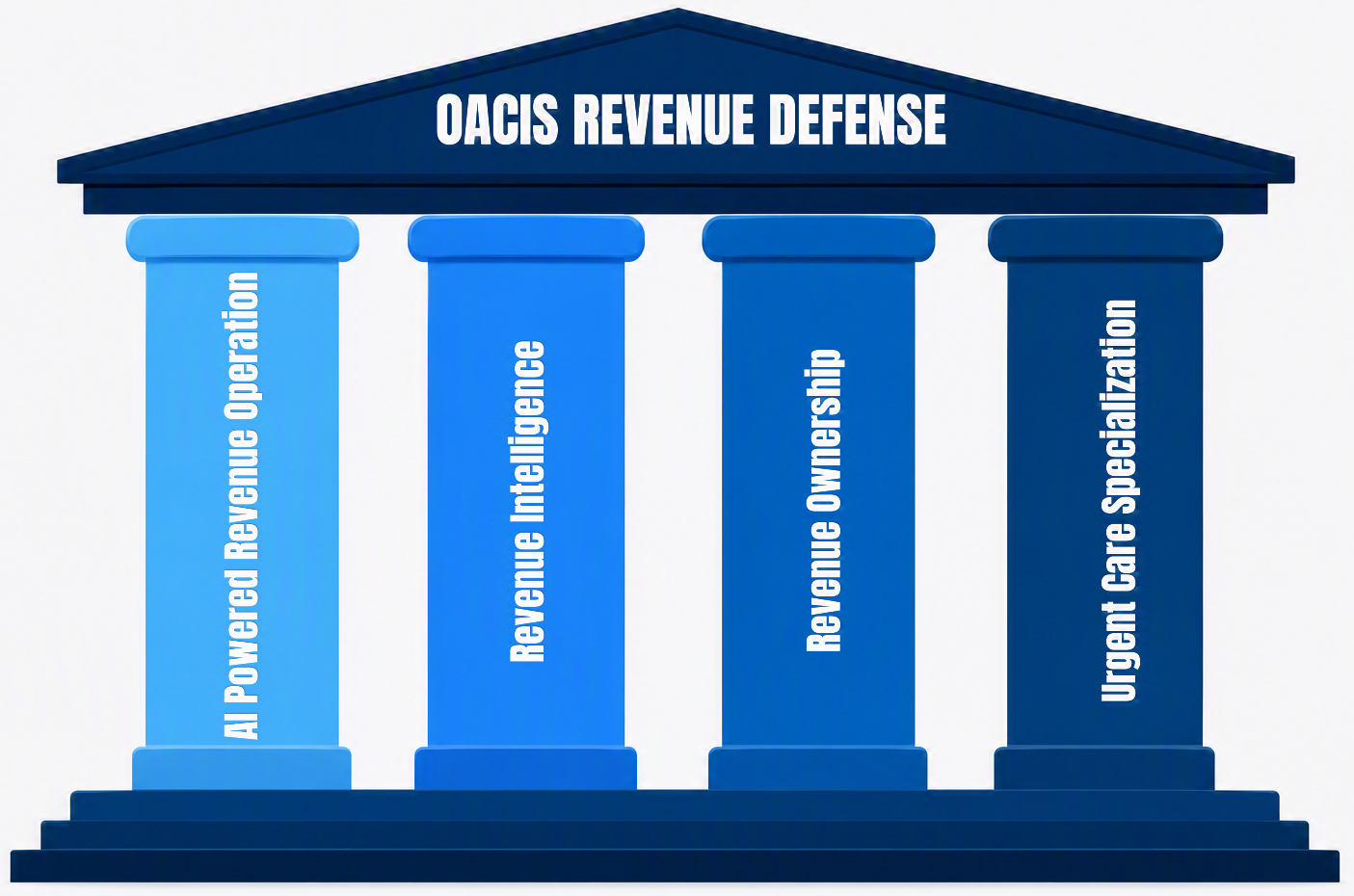
Four pillars that make revenue operations defensible
Unlike large vendors who optimize for scale, we optimize for accountability. Each practice gets a dedicated Revenue Operations Manager. When issues arise, somebody owns the outcome.
We see patterns across multiple practices simultaneously. Denial trends, payer behavior shifts, underpayment patterns — our cross-practice intelligence identifies issues before they affect your cash flow.
We use AI internally to accelerate claim processing, predict denials before submission, and reduce manual effort — passing the savings on to you through better margins and faster turnaround.
We focus on independent urgent care organizations. That means deeper payer knowledge, more relevant benchmarks, and solutions built for your specific workflow — not adapted from another specialty.
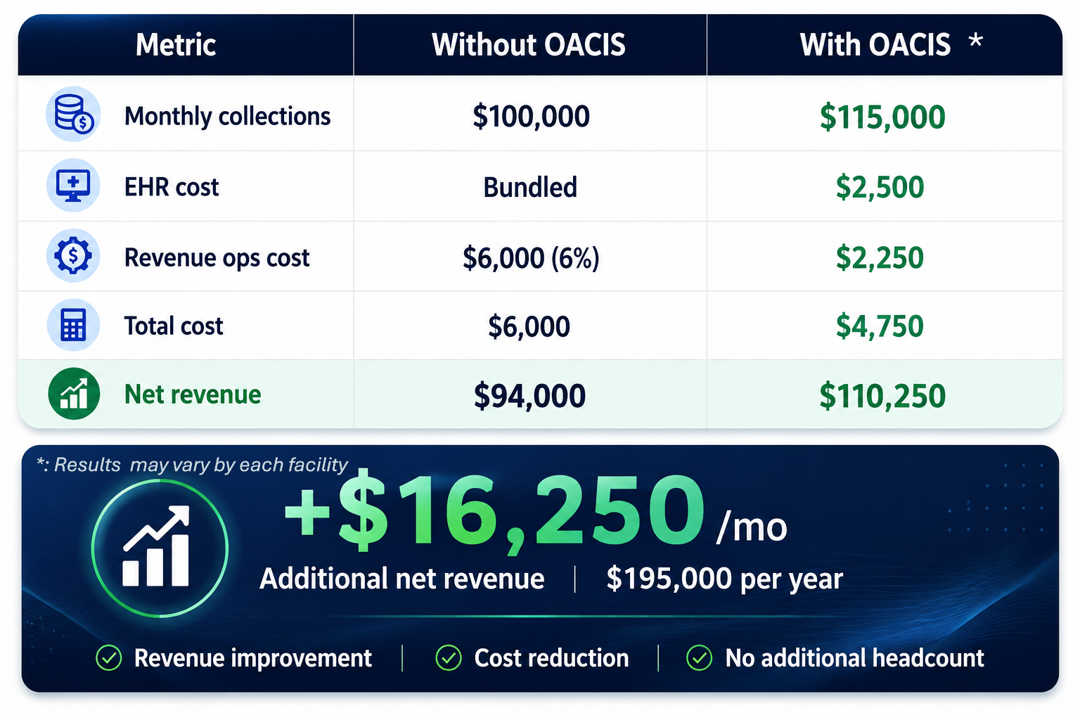
OACIS replaces your existing EHR/RCM bundle arrangement. You keep your EHR software, pay a software-only rate, and OACIS manages all revenue operations — typically at a lower total cost with significantly higher collections.
The example shown is a 5-provider urgent care practice at $100K/month in current collections.
OACIS publishes independent research and analysis on where healthcare reimbursement is heading — and what independent practices need to do about it.
AI eliminates routine tasks. But when revenue issues arise, someone still needs to own the outcome.
Most practices can tell you how many claims were submitted. Very few can tell you where revenue is being lost.
OACIS publishes independent research and analysis on where healthcare reimbursement is heading — and what independent practices need to do about it.
The environment has changed dramatically. The question is whether your revenue operations model has changed with it.
AI eliminates routine tasks. But when revenue issues arise, someone still needs to own the outcome.
Most practices can tell you how many claims were submitted. Very few can tell you where revenue is being lost.
Patterns we see again and again across independent practice revenue cycles.
The OACIS Healthcare team demonstrated a strong understanding of urgent care revenue cycle complexity and brought a level of operational insight that went far beyond traditional billing discussions. Their structured audit identified several revenue leakage patterns and meaningful operational and financial optimization opportunities that were not previously visible to our team.
We frequently begin audits at practices running denial rates near 20%, with no payer-specific workflow behind their billing. The denials are overwhelmingly preventable — eligibility gaps, missing authorizations, and modifier errors — and a disciplined, payer-specific process is what separates a sub-5% denial rate from a 20% one.
Claim rejections in the low double digits are common in practices without a structured front-end review. In our experience, the issue is almost never coding talent — it's the absence of a consistent guideline system. Once one is in place, rejections and denials typically fall sharply within the first two months.
A recurring red flag we document is A/R over 90 days sitting well above benchmark — often a quarter or more of total receivables — while net collection rates quietly underperform. Aging A/R is the clearest early signal that follow-up has no owner, and it's usually the fastest place to recover real dollars.
Out-of-network and non-par claims are where we see the most revenue left on the table. Without a deliberate strategy for timely filing and payer negotiation, low reimbursements get accepted as final and written-off balances go unrecovered — when many are, in fact, collectible with the right approach.
Schedule a call with our Expert now